
BSc, Ph.D., CEng, FIET, FIEEEProfessor, Department of Electrical Engineering, Email: ericcheng@ucmerced.edu Office: Science and Engineering Building 2 (SE2) Room 379
Eric Cheng graduated with a BSc in Electrical and Electronic Engineering and obtained his PhD in Power Electronics from the University of Bath, U.K. Before transitioning to academia, he worked as a Principal Engineer at Lucas Aerospace in London. With over 25 years of teaching experience, he has held positions in the UK, Hong Kong, and the U.S. He is currently a Professor in the Department of Electrical Engineering at the University of California, Merced. Dr. Cheng has authored or co-authored more than 500 articles and seven books. His research interests encompass all aspects of power electronics, including motor drives, electromagnetic interference, electric vehicles, battery management, and energy conservation. His achievements include receiving the Institution of Electrical Engineers Sebastian Z. De Ferranti Premium Award in 1995, the Outstanding Consultancy Award in 2000, and the Faculty Merit Award for Best Teaching in 2003. He has also been honored with the Faculty Engineering Industrial and Engineering Services Grant Achievement Award in 2006, the Brussels Innova Energy Gold Medal with Mention in 2007, and the Consumer Product Design Award in 2008. Additional accolades include the Electric Vehicle Team Merit Award in 2009, the Eco Star Award in 2012, the Gold Prize at the Seoul International Invention Fair in 2015, and the iCAN Gold Medal in 2016 for his contributions to active suspension. More recently, he received the Gold Award from HK Innovation and Technology in 2017 for his work on body-integrated supercapacitors for vehicles, the Geneva Invention Expo Silver Medal in 2021 for contributions to e-Antilock braking systems, and accolades from TechConnect 2023 and Geneva Invention 2024 for his pioneering work in ammonia electric vehicles. Dr. Cheng is actively engaged in institutional activities and has served as an international conference chair more than 10 times. He is currently the Vice President of Education for the IEEE Transportation Electrification Council. | 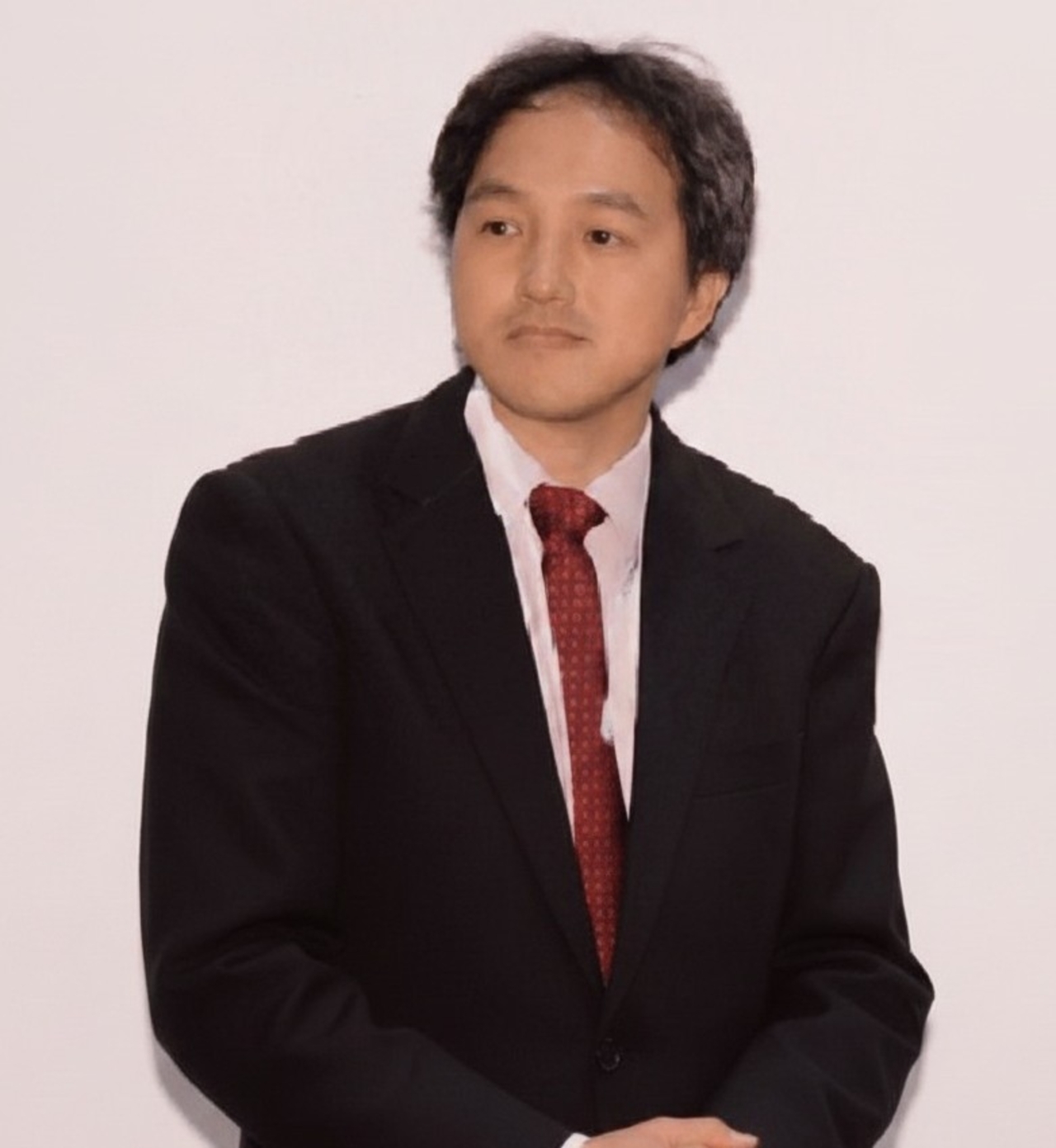
|
|---|
Power Electronics Research
My Research Record
I am an active researcher in electric vehicle technology, with distinctive areas of focus including renewable energy, energy storage, energy management, power conversion, electric mobility, power electronics, electrical machines, power systems, and fuel cell technology. My research journey began in power electronics, which was also the focus of my PhD. Power electronics serves as an enabling technology for all energy conversion and mobility research, encompassing electrical power conversion, energy storage, motors and drives, renewable energy, smart energy systems, smart mobility, and robotics.
Initially, my research centered on aerospace power electronics, evolving into static power conversion, energy processing, energy storage, vehicle design, electrical machines, and actuation. My ongoing R&D in power conversion—covering solar and wind power generation, energy management, new energy sources, vehicle-to-grid (V2G) systems, power distribution, and processing—represents my most active and impactful work over the past 30 years. These areas have led to significant developments in the industry, including floating solar power, floating wind turbines, electric vehicles, motor design, and energy storage management systems, all closely aligned with the concepts of smart cities and smart mobility. I have successfully developed and built numerous vehicles and systems, extending my research beyond electric cars to various vehicle components.
Much of my research has practical applications in the industry. I have not only formulated new theories related to vehicle systems, energy systems, control, and power conversions, but have also successfully transferred this technology into industrial products. My work has contributed to several notable industrial projects, demonstrating high scientific and industrial value, all of which are pertinent to society. Here are seven representative areas of my research:
- Electric Vehicles (EVs): I led the team to develop the first commercial electric vehicle in Hong Kong, which received commercial certification and has been on sale since 2007—well ahead of many countries. Additionally, I created the world's first ammonia-powered electric vehicle in 2021, including the ammonia cracking system, power conversion, motor and drive, and energy management for both light vehicles and buses.
- Electric Vehicle Parts and Technology: I have developed several electric vehicle technologies, including active suspension systems, battery chargers, in-wheel motors, and linear compressors. My research in vehicle-to-everything (V2X) technologies has garnered international awards and high citations.
- Energy Storage: I have worked on various energy storage power conversion systems, including supercapacitors, Li-ion batteries, and hybrid energy storage solutions. My recent projects focus on battery management systems and supercapacitor energy management systems, which have been licensed for use in mobility, renewable energy, and building applications.
- Power Distribution and Chargers: I have pioneered new methods in magnetic power distribution, DC power distribution, high frequency power distribution, voltage stability, and various types of chargers, including high-power wireless chargers and electric vehicle-to-grid connections.
- Power Converters: My research in power converters began 30 years ago, with a strong focus on resonant and switched-capacitor converters for applications in DC-DC, DC-AC, multi-level inverters, and AC-DC rectifiers—critical technologies for electric vehicle powertrains.
- Solar Energy: Since 2009, I have collaborated with industry partners to develop photovoltaic applications for electric vehicles, including solar air conditioning systems installed in over 100 vehicles, notably seven Coca-Cola delivery trucks. I am also developing a high power seawater floating solar system, one of the largest in the world, located off the coast of Hong Kong.
- Electrical Machines: Since 1997, my research has focused on switched-reluctance machines due to their fault tolerance and lack of permanent magnets. I have developed various machine types for applications in actuation, wind power, solar power, compressors, and electric boats—key technologies for electric vehicles.
In addition to these areas, I have expanded my research to include:
- Electric Vessels: I am translating my EV research to electric vessels, currently working on two projects: one for an electric rescue boat and another utilizing an electric jet engine. I am also developing wireless power charging systems for electric vessels, addressing the challenges of displacement between moving vessels and the shore.
- Water Wave and Ocean Power: I am exploring the design of water wave energy converters using linear-to-rotational systems to capture wave energy. This research includes developing mechanical subsystems for wave power generators and has received the Gold Medal at the iCAN international competition in 2018.
- Wind Power Generation: My research aims to develop vertical axis wind turbines using multiple-phase generators, allowing direct drive without gear losses. This technology is based on switched-reluctance machines, which are fault-tolerant and cost-effective due to the absence of permanent magnets. My recent designs for floating wind turbines are promising, enabling installations on floating platforms rather than expensive foundations.
- Motion Control: This technology is critical for the future of vehicles, transportation, and robotic systems. My primary research focuses on high-performance precision motion control using switched-reluctance motors, which are essential for advanced precision actuation systems.


